 The following are excerpts of an article was written by Angela Eschler and Kat Gille and was published at https://www.eschlerediting.com/avoid-a-big-newbie-mistake-and-learn-what-an-editor-should-do-before-your-books-go-public/
What is one of the biggest mistakes new authors make before sending their books into the world? Not hiring a professional editor. You may think that sounds salesy, but this isn’t a sales pitch. It’s a mini course in what makes a book sink or swim—and it’s knowledge you’ll want on your side before sticking your neck out and taking your book public.
There are many reasons to enlist the services of a professional editor before producing your self-published book or trying to secure an agent. The most basic reason is to ensure your writing is good enough, your subject interesting enough, and your materials organized enough to attract the readers you want. You don’t often get more than one chance to catch a reader (be they a customer or an agent) with the same work, so it’s best to make sure you’re putting your best foot forward the first time.
But how do you pick the right one? As author Dave Bricker put it, you’re looking for someone who’s not only spent years studying the finer points of language, grammar, punctuation, and typography (hyphens, en dashes), but has “the ability to read a narrative deeply, find inconsistencies, recognize overused patterns, understand . . . storytelling, and convey these to an author as [a] useful, sometimes hard-hitting but never insulting critique. This kind of professional is difficult to come by—this editor understands both the left-brained, technical points of fine writing and the right-brained art of communicating stories, ideas, emotions, experiences, and streams of consciousness and perspective for which there are no names.”
A professional editor who fits those qualifications will be able to help with the following:
Market awareness.
- Knowing when you are better off traditionally publishing vs. self-publishing.
- Understanding what makes for a marketable story and a good story premise (or hook), or what makes for compelling nonfiction that is correctly positioned to reach the ideal audience. This includes knowing how to hook an audience with your first pages so you don’t lose the chance to share your story or ideas.
- Fixing clichés.
- A professional who has worked in-house at a traditional publisher will also be able to give you feedback on many other parts of the publishing process, including whether your cover will sink or swim, whether your query letter or proposal will snag an agent, whether your website is going to appeal to your target audience, which promotion strategies to explore first, and can give you tips on many other issues relating to the publishing-industry and publishing-business.
 Audience awareness.
Are you looking to impress? Inform? Entertain? Will your audience know the things you know? Does your audience even exist? You need someone who knows how to organize your content for the market you want to hit.
Reader awareness.
This may sound like the same thing as audience awareness, but what we’re talking about is understanding what an individual reader will likely experience when reading your book.
- Which parts will drag?
- Which ones will be confusing?
- Which explanations will need more detail?
A writer almost always needs an outside perspective to give them insight into what’s not working.
 Language and technical expertise.
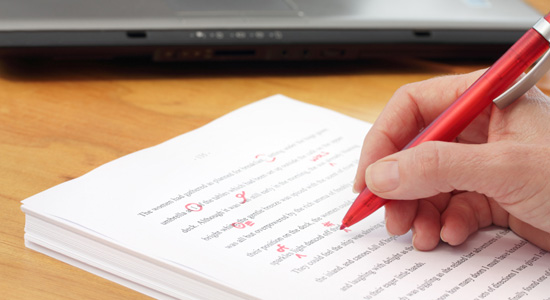
Of course, the main thing people think of editors for is language expertise and the polish that makes you look like a professional. Publishing budgets are getting smaller and competition at publishing houses is getting stiffer, meaning that fewer companies are willing to mentor inexperienced authors. Having a professional on your side who is familiar with grammar, usage, and style guides will give you a presentation edge.
- Do I use that or which in this case? How am I supposed to use a semicolon?
- Ohmigosh, I had no idea that putting that comma there made my sentence mean that!
- Now how does APA style require me to list the references I’ve used?
Knowing when to do some research.
Some parts of your manuscript can be completely fictional. Many things, however, are based on reality and therefore have the potential of making your manuscript less credible if you fail to research how such things function in the real world. For example:
- Did you know that the town of Eagar, Arizona, does not spell its name like the word eager?
- Did you know that not even a HALO parachuting maneuver would attempt to deploy a parachute at less than 500 feet?
- Did you know that coders during the Second World War wrote their cipher keys on silk handkerchiefs that they could then unravel to erase the codes? (Not what you have them doing?)
Get things like this wrong, and you’re likely to annoy a knowledgeable reader (and thus lose that word-of-mouth promotion), embarrass yourself, or receive poor reviews.
 Avoiding other pitfalls that will alienate readers.
- Did you know that some of the wording in your manuscript shows bias against people who did not go to college?
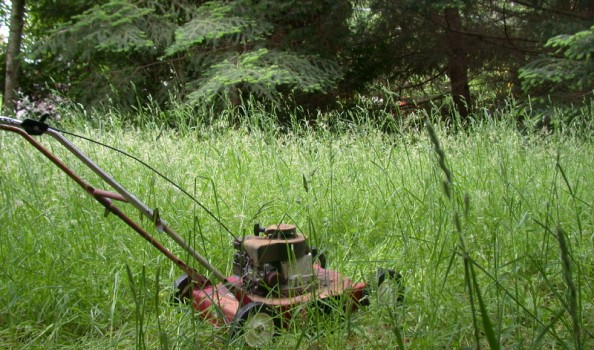
- Did you realize that you’re assuming your readers grew up in a home with a yard to be mowed? They aren’t understanding the implications in this scene because their experience isn’t the same.
- Your story is based on events that happened in your family several decades ago, but you want to modernize it for today’s hot YA and middle grade markets; well, you’re going to have to make some changes—like that children these days aren’t allowed to sit in the front seat of a car because of airbags, so current youth readers won’t identify with fighting over who gets to sit in the front seat. This example may seem obvious, but dozens of times a day, editors catch things that don’t make sense to the target audience, things that could very well get your book put back on the slush pile since only-the-most savvy-can-pass is what drives most publishers and agents.
Noticing your weaknesses/Achilles’ heel.
Some things aren’t going to be obvious to you. Some things aren’t going to be obvious to people who know you—the loved ones you’re having read your manuscript. They’ll see those potential writing Achilles’ heels as part of who you are rather than as things you’ll need to change in order to be successful in publishing. They won’t know the ramifications of failing to address your weaknesses.
Being honest with you about what you and your manuscript need.
- Friends will hesitate to hurt your feelings and feel the need to sugarcoat things to some extent. Professional editors are less shy about telling you what works and what doesn’t and where your skills are versus where they need to be.
- Friends might have strong feelings about certain things and may not realize that their opinions are not necessarily indicative of the market you’re trying to tap. A professional editor can tell you where you stand against the competition.
 Giving you the professional edge.
Let’s be honest: Your unsolicited manuscript isn’t going to be read all the way through before a decision is made. In fact, it may not be read at all. Your cover letter/query letter/or whatever else it is that the publisher you’re courting has asked you to submit may be the only thing of yours anyone at the publishing house ever reads. The same goes for readers of the self-publishing market. With literally hundreds of thousands of titles to choose from, you’ve got limited time, and chances, to impress. You’ve got to present yourself and your work as worthy of their valuable time and attention. A professional editor provides that polish.
A poorly written book will die in the arms of uninterested readers. You need to make sure you mark yourself as a professional from the start; your manuscript must be evidence of your dedication to do what it takes to produce quality material for publication.
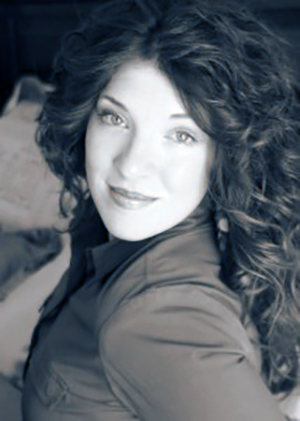 Angela Eschler, founder of the award-winning Eschler Editing and manager of the boutique publisher Scrivener Books, is a mommypreneur, mentor, book devourer, and closeted fan of the family tradition—eating peanut butter on her cereal (seriously, try it!).
She has more than twenty years of experience in the publishing industry, including nearly a decade working in-house at traditional publishers. She now works as a freelance editor and industry coach for authors, editors, publishers, and other organizations and has edited more than a thousand manuscripts from diverse genres.
A published author herself, Angela’s work has been featured on television, radio, and in documentary film.
(Photos: red pen, viralservice.com; girl reading book, Pixabay; editing, blogspot.com; lawn mower, 98.5 KTIS; vintage books, Pinterest; Angela Eschler, Eschler Editing)