 Turns out I can learn a lot from how one group of people dealt with a virus. (Maybe not this virus, but a virus nonetheless.) Stick with me, because there’s something here for all of us.
At the age of twelve, Bengt Johnson Jr.—my maternal great-grandfather—left Sweden on April 6, 1862, with his parents and two younger brothers. Nine days later, they boarded the Franklin at Hamburg, Germany, part of a group of 413 Scandinavian Latter-day Saints bound for Zion.
There was nothing comfy about this journey. The 413 passengers had 160 bunks, each wide enough for three people to sleep side by side. (That means two of Bengt’s family shared with “someone else.”) Those were close quarters. But no worries: they were thoroughly “fumigated” twice a week with burning tar. To read more, click the button below.
 The 413 passengers also shared 11 lanterns. Pretty dim once the sun went down.
 Their rations consisted of beef, pork, peas, beans, potatoes, pearl barley, rice, prunes, syrup, vinegar, pepper, coffee, tea, sugar, butter, rye bread, sea biscuits, water, flour, salted herring, and salt. If you think that sounds pretty good, think again: the head cook, who was hired in Hamburg, and his two assistants (men from the company of Saints) stuck to an unvarying menu. On Sunday, the cooks served “sweet soup”; Monday, pea soup; Tuesday and Wednesday, rice; Friday, barley mush; and Saturday, herring and potatoes. On Thursdays, they fasted.
The cooks baked wheat bread for the old people. The sick people (of which there were many) got pancakes and porridge every day, since they couldn’t eat the “sea biscuits.” Even for the healthy, the biscuits had to be soaked in tea or water for ten hours before they were soft enough to bite into.
There were lots of sick people, and here’s where the virus comes in: some of the passengers brought measles with them when walked up the gangway in Germany. The disease spread throughout the entire ship, affecting young and old alike (hard to keep your distance when you’re sleeping three to a bunk); forty-three children and three adults died from it and were buried at sea. During the last few days of the journey, chicken pox also broke out. (No clue where that suddenly came from.)
After a journey of 44 days, the ship landed in New York on May 29. The passengers who were well enough to stay on the ship were quarantined in dock (sort of like “sheltering in place”); 18 others were hospitalized and died (you guessed it—from the measles). Not wasting any time, the Saints who survived sea passage pressed on to Florence, Nebraska, where they arrived on June 9. On July 20, 1862, they left for the Salt Lake Valley with the company of Joseph Horne, a group consisting of 570 people and 52 wagons with ox teams. Not a soul in Joseph Horne’s company died on the trek to the Rocky Mountains.
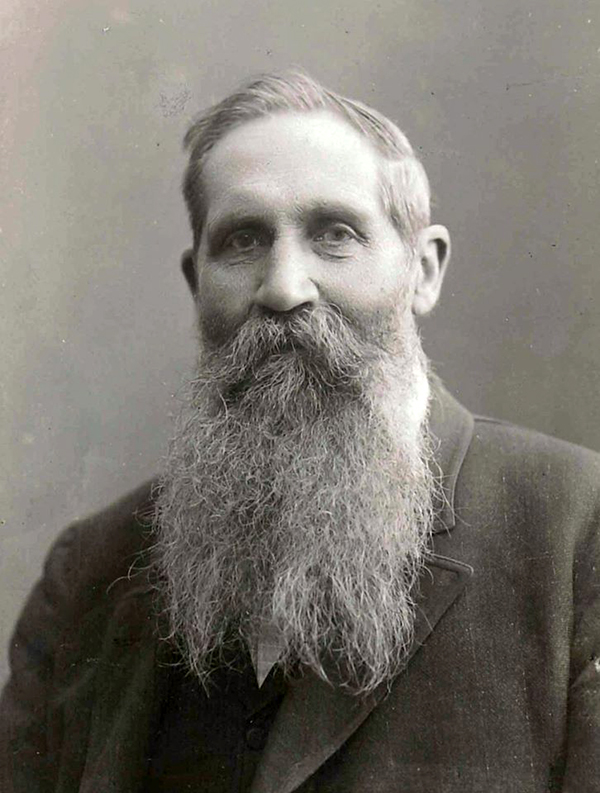 Bengt, his parents, and his two younger brothers all arrived safely in the Rockies. Here’s how he looked after his third mission back to his native Sweden—all of them served after he became a husband and father.
If you’re still with me, I want you to know this is more than a mere trip down memory lane or a snippet of family history. It’s a pattern for us in a time most of us thought we’d never experience.
Here’s why: during the crucible of that ship voyage, the passengers could have exhibited not much more than gloom. Yet they amused themselves by dancing on the deck. Those who brought musical instruments—including some of the crew—played for the others. They sang. They met regularly to worship. At 7 each morning and 9 each evening, they gathered in districts for prayer.
And despite the extremity of their conditions, including burying their children at sea, one of the leaders wrote, “A spirit of peace prevailed. . . . The captain and crew were good-natured and obliging and so were the cooks, who even served the sick when they were not on duty.”
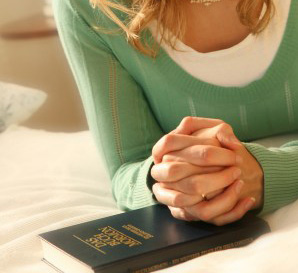 Yes, we’re having an unprecedented experience right now. But as I consider my forebears on the Franklin, I recognize that I can dance (even if only by myself), can play my piano, can sing, can worship, can pray.
I realize that I have things other than pea soup, barley mush, and rock-hard sea biscuits to eat. That I have a warm, comfortable bed I’m not sharing with strangers. That I have enough light to read into the wee hours of the morning if I so choose. That I can light a scented candle and enjoy the fragrance of something other than burning tar.
 I am reminded too of the Saints who surround me. The friend who shared her own stores with me, bringing me bananas so I could make banana bread—and the strawberry cream cheese I was craving. (Talk about a first-world problem.) The friends who regularly text me from the grocery store with offers to pick things up. The women on the corner who show up unannounced with delicious home-cooked meals. The neighbor who brought me a package of toilet paper. The men who brought me the sacrament and the blessing of their priesthood. The ward leaders who, respecting safe distance, sent me a video expressing their love. All of them carry on the tradition of those people on the Franklin who “served . . . even when they were not on duty.”
Do I do that? Though I have been ordered to stay home, do I serve even when “not on duty”? Do I find ways to bless and lift as many as I can in whatever circumstance I find myself?
It is up to me to make sure a “spirit of peace” prevails—not only within the walls of my own home, but in every corner where I can exercise any influence, even from a safe distance. The Lord who directs us all brought the ship carrying my ancestors to safe harbor, took those determined souls over the wilderness and through the rugged mountains, and delivered them to their second safe harbor. He will lead me, too—and you, and all of us—through this and through whatever else we face until we once again see His face.